

Two architectures under one label
The provider uses a third-party language model (LLM) via an API
The software sends user text to an external service, which returns a response. This is quick to implement and very common. The model's operation, hosting, and updates are then entirely dependent on the LLM provider.
The provider develops and operates its own AI
They choose their architecture, host it on their own infrastructure, decide what is stored and what is not, and can document how it works. This requires more investment, but it changes the nature of the commitments the provider can make to its clients.
Neither of these two approaches is illegal. The difference lies in what the provider can demonstrate and what the client can verify.
Why does the difference matter in QHSE ?
QHSE software handles sensitive data: accident reports, work stoppages, certifications, audits, and information about employees and subcontractors. Three key issues arise from this.
- Where does the data go ? If it passes through a third-party service, in which country is it processed, and how long is it stored ?
- Is it being reused ? Some offerings allow the use of interactions to improve their models by default. Contractual terms must be checked one by one.
- Who is accountable for what ? In the event of an incident or audit, the chain of responsibility is easier to establish when a single entity operates the entire system.
The CNIL practical guides on AI detail the GDPR points of vigilance to examine for any AI system processing personal data.
How to verify what you are buying ?
Ask your vendor in writing :
- who designed the model used and who operates it ;
- where the processing and data are hosted ;
- whether any sub-processors are involved in the processing, and if so, which ones ;
- whether your data can be used to train a model, and under what conditions ;
- what documentation describes the operation and limitations of the AI.
A precise, contractually binding response is a good indicator of control. A vague response is a reason for caution.
The Symalean approach
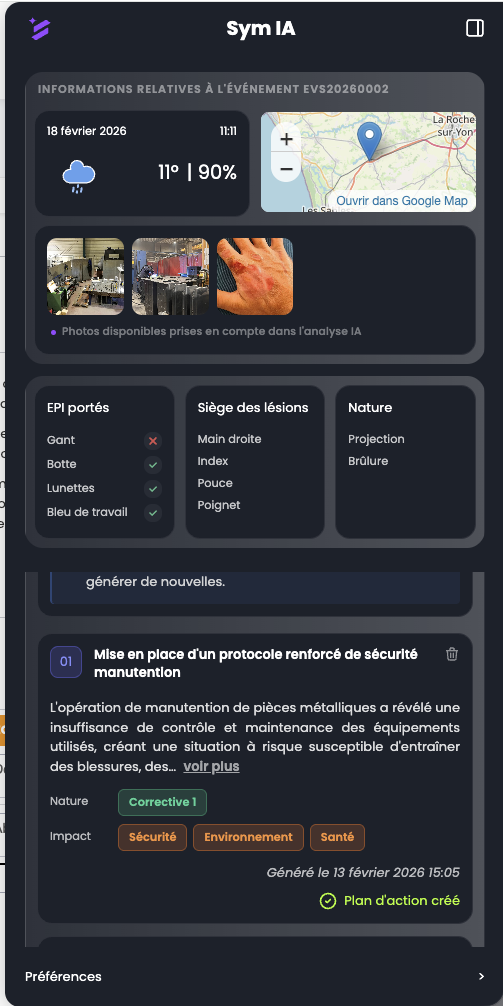
Symalean's AI is developed by Symalean. It is hosted on HDS-certified servers and designed to protect client data. Furthermore, Symalean has initiated the certification process for ISO/IEC 42001, the standard for AI management systems. To understand this standard, read our ISO 42001 guide.