

On origin and operation
- Who designed the AI and who operates it ? Is it a model developed by the vendor, or a third-party service called via API ?
- What data was the AI built on ? Public data, the vendor's own data, or customer data ?
- What are the known limitations ? A reliable AI documents its intended use cases and potential errors.
On data
- Where is the data hosted and where is it processed ? Ask for the name of the hosting provider and their certifications, including HDS if health data is involved.
- Is my data used to train a model ? Expected answer : yes or no, without ambiguity, supported by the corresponding contractual clause.
- Which sub-processors are involved ? The list must be provided and kept up to date.
On compliance
- How is GDPR taken into account ? Register, impact assessment, data subject rights, and retention periods.
- How is the software provider preparing for the AI Act ? Timeline, provider role, available documentation. The Regulation (EU) 2024/1689 and its recent updates serve as a reference.
- Does the provider follow an AI governance framework ? The ISO/IEC 42001 is one such example. Specify whether this is an ongoing initiative or an achieved certification.
Regarding usage
- Who makes the decisions ? The AI suggests, the user validates. Ensure that the software does not make any decisions concerning individuals without human intervention.
How should these responses be used ?
Enter them into a comparison table, provider by provider. Precise, documented answers are worth more than marketing promises. A lack of response is information in itself.
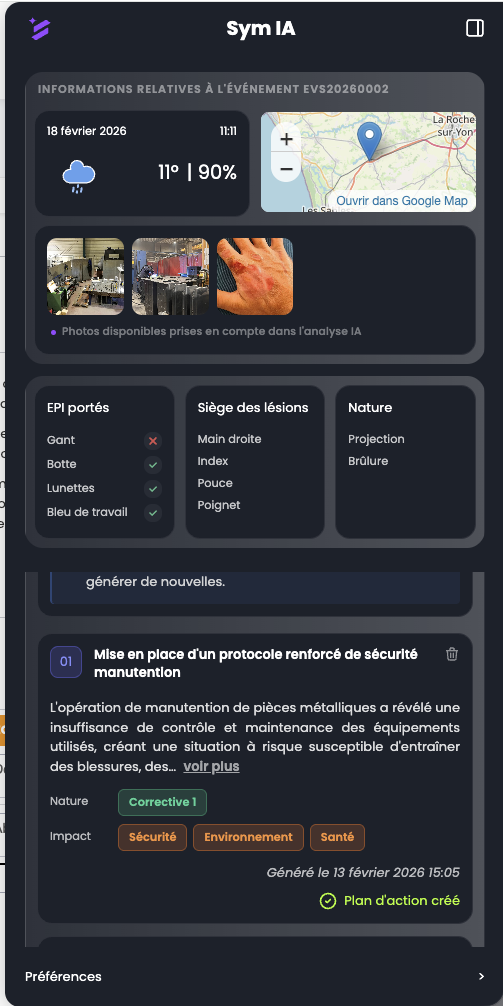
Symalean answers these questions
Sym Ai is developed by Symalean, hosted on HDS-certified servers, and designed in compliance with GDPR and the AI Act framework. Symalean has initiated a process for ISO/IEC 42001 certification. To discuss this further, request a demo.