


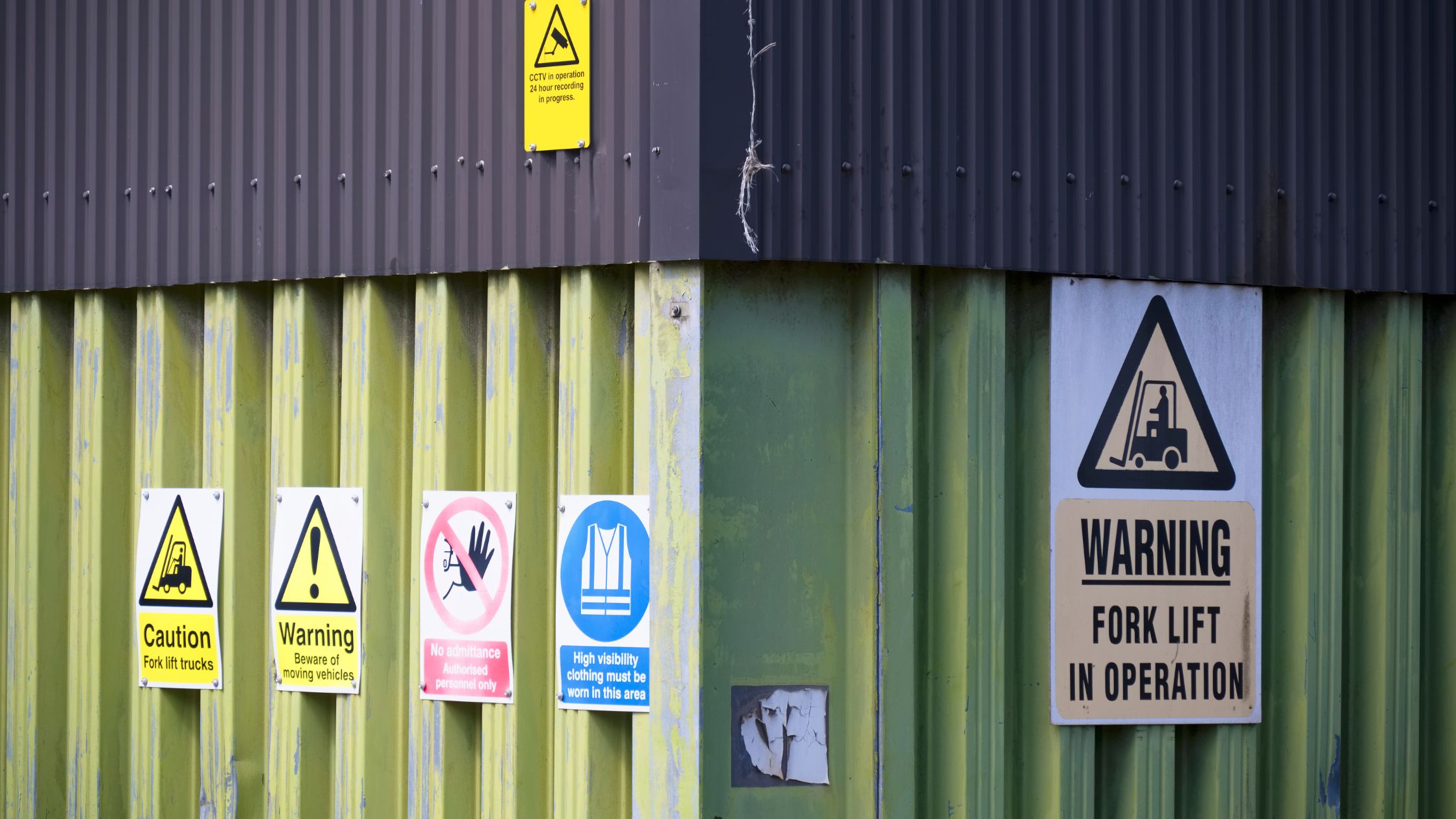
Accident rates are on the rise again
After several years of stability, the figures have deteriorated significantly. In 2025, 1,534 incidents and accidents were recorded in facilities classified for environmental protection (ICPE), an increase of 23.3% compared to 2024, including 513 accidents (a 21.5% rise) according to the report from the General Directorate for Risk Prevention published in July 2026. The waste, agriculture, and chemical industry sectors are among those most affected by this increase.
The year 2024, while more stable, had already served as a reminder of the potential severity of these events: two fatal accidents were recorded, both linked to hot work, according to the BARPI, the Bureau for the Analysis of Industrial Risks and Pollution, a department of the Ministry for the Ecological Transition that manages the ARIA database, which tracks over 62,000 industrial events in France and abroad.
Risks specific to the industrial environment
Chemical risk remains the primary concern
Releases of hazardous materials are the most frequent phenomenon in industrial accident statistics. We have detailed the hierarchy of prevention applicable to this risk, from substituting hazardous products to personal protective equipment, in our article on chemical risks in the workplace.
Hot work: a common blind spot
The two fatal accidents recorded in 2024 share a striking commonality : one occurred on a hydrocarbon storage tank that had been emptied and out of service for several months during maintenance work. This type of accident illustrates a classic industrial trap: an installation that appears neutralized may still contain residues or a hazardous atmosphere, which remain invisible without rigorous prior inspection. The hot work permit, which specifically governs welding, cutting, or grinding operations, requires heightened vigilance for every intervention, even on equipment considered safe.
Coactivity between external contractors
An industrial site rarely involves only one company. Maintenance, industrial cleaning, and regulatory inspections mean that coactivity is constant, which directly relates to the prevention plan obligations we detailed in our comprehensive guide and in our article on Labor Code requirements.
Reporting obligations for ICPE sites
Beyond general workplace safety obligations, classified sites carry specific responsibilities. Article R.512-69 of the Environmental Code requires any operator of a classified installation (whether subject to authorization, registration, or declaration) to report accidents and incidents resulting from the operation of their facility to the classified installations inspectorate as soon as possible, notes Previlink. This obligation directly feeds the ARIA database, which then serves as a reference for the entire sector to learn from past events.
The most exposed industrial sectors
The ranking of the most accident-prone sectors remains relatively stable from one year to the next : waste and wastewater, food processing, chemicals and pharmaceuticals, agriculture and livestock, and metallurgy consistently occupy the top spots, according to successive inventories by the BARPI. An industrial company operating in one of these sectors would do well to view this ranking as a warning signal rather than just a sector-wide statistic.
Structuring prevention at the industrial site level
Several levers can help adapt a prevention strategy to the specificities of an industrial environment :
- Strengthen work permit procedures for high-risk interventions, particularly hot work
- Systematize root cause analysis after every incident, not just after the most serious accidents
- Centralize prevention plans for all external companies working on-site
- Monitor ICPE reporting obligations without waiting for a serious accident to bring them to light
- Integrate sector-specific feedback, via the ARIA database, into internal risk analyses
How does QHSE software centralize industrial safety ?
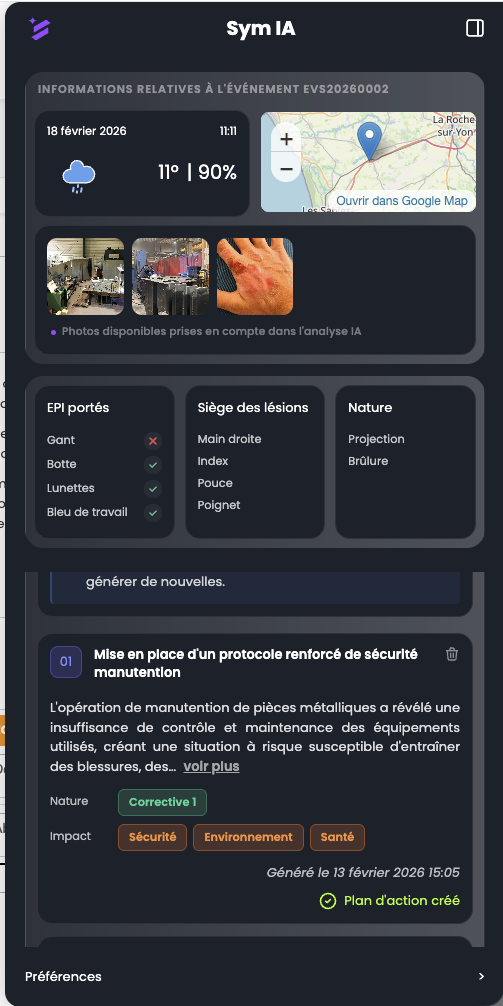
Between prevention plans for multiple external contractors, work permits to renew, ICPE declarations to produce, and chemical risk monitoring, an industrial site generates a volume of compliance data that is difficult to manage reliably using scattered tools. Industrial groups such as ArcelorMittal or Fives Group rely on the Symalean Safety module to centralize this workload, with traceability that is directly actionable in the event of an inspection or audit. For a complete overview of the solutions dedicated to your sector, our industrial sector page details all the relevant modules.


.png)