What is a QHSE action plan ?
The QHSE action plan centralizes all corrective, preventive, and improvement actions decided upon following an audit, non-conformity, accident, or management review. For each action, it specifies a lead person responsible, a deadline, the necessary resources, and a criterion for verifying effectiveness. This last point is what distinguishes a true action plan from a simple list of reminders: without verifying effectiveness, there is no guarantee that the action actually solved the problem rather than just treating the symptom.
The PDCA cycle, the backbone of any effective action plan
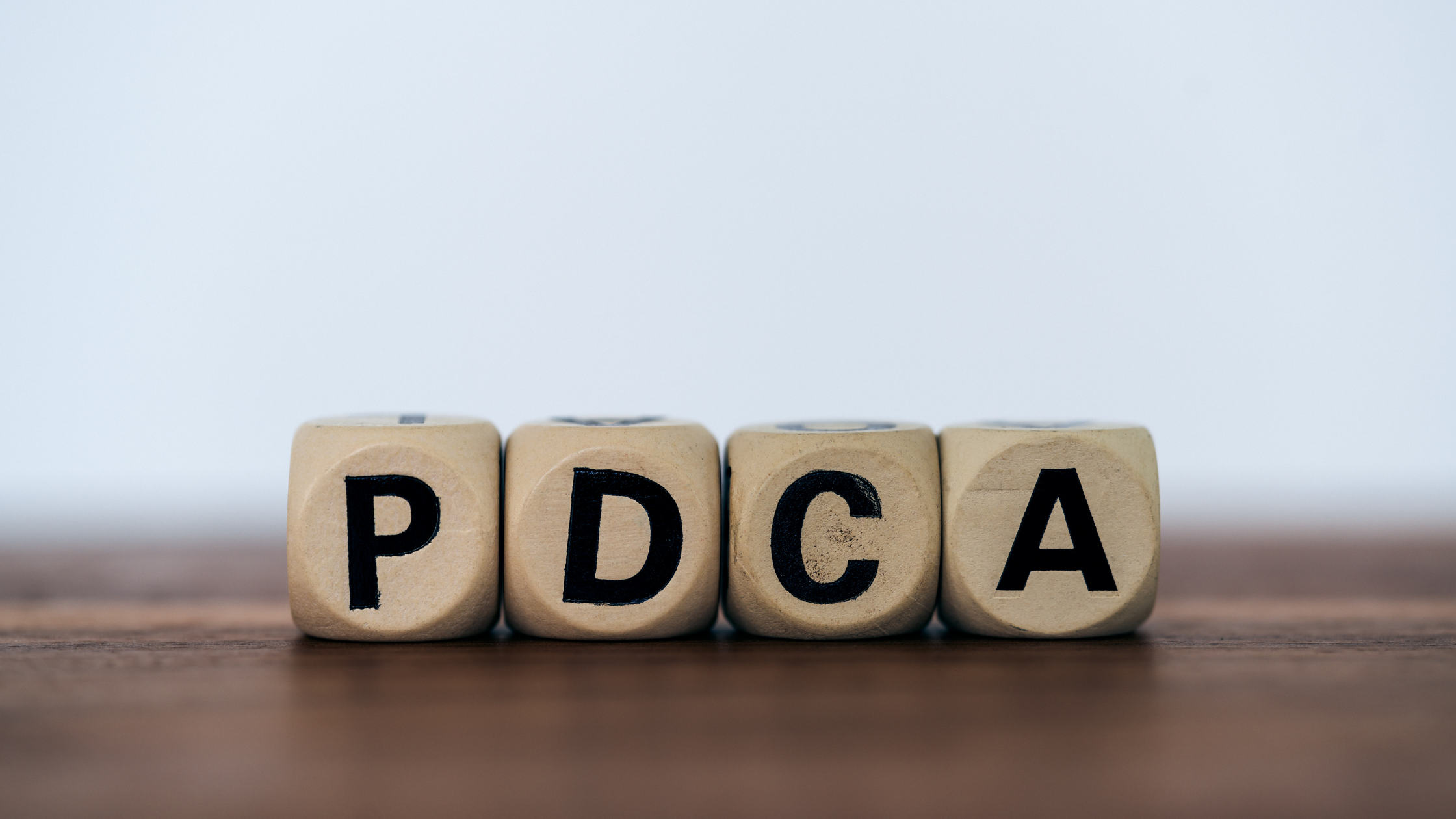
Almost all effective QHSE action plans rely, consciously or not, on the PDCA (Plan, Do, Check, Act) cycle found at the heart of the ISO 9001, ISO 14001, and ISO 45001 standards, as detailed in one of our articles. This convergence is no coincidence : it is this cycle that structures the logic of continuous improvement required by these three standards.
Plan : analyze and plan
This first phase consists of preparing the work: identifying the need, analyzing the context, setting the objective, choosing the actions, and defining success criteria. It is a decisive scoping phase. Indeed, a poorly prepared plan will almost always result in laborious execution, regardless of the quality of its subsequent monitoring.
Do : deploy the actions
The planned actions are implemented according to a defined schedule, with a clear allocation of resources and responsibilities. It is at this stage that the role of the designated lead becomes central : without a clearly identified owner, an action has statistically little chance of being completed on time.
Check : verify the results
This phase involves measuring the results obtained against the indicators defined beforehand. According to Asana, the PDCA cycle allows teams to track results using performance indicators and adapt their methods to achieve sustainable goals. Furthermore, this is a verification step that should never be skipped, even when the action appears visually complete.
Act : adjust and standardize
The final step of the cycle : if the action worked, it is standardized and deployed more broadly; if it did not produce the expected effect, it is adjusted or replaced. This feedback loop is what distinguishes a continuous improvement approach from a series of disconnected, one-off actions.
Where does this method come from ?
The PDCA cycle was popularized by W. Edwards Deming, but its foundations date back to the work of Walter Shewhart, a pioneer of statistical quality control, who laid the groundwork for the scientific method applied to quality control in his book Economic Control of Quality of Manufactured Product, as noted by Asana. This is why PDCA is sometimes called the "Deming wheel," even though its initial inspiration predates his own work.
To learn more about applying this method to a quality system, we have detailed the PDCA cycle and continuous quality improvement in a dedicated article.
Why do so many QHSE action plans fail ?
In practice, continuous improvement is too often reduced to a simple to-do list. With every audit or incident, new tasks are added without being linked to a comprehensive analysis : the result is isolated actions, follow-up that fades over time, and almost zero knowledge retention.
A lack of in-depth root cause analysis is one of the most common reasons for failure in the field, according to Resilience Consultants : treating the symptom without identifying the root cause almost always leads to the same non-conformity reappearing a few months later in a slightly different form.
Best practices for a sustainable action plan
A few simple principles can help you avoid the most common pitfalls :
- Always link an action to its root cause, not just the observed symptom
- Assign a single owner to each action, never an entire team without a designated lead
- Set a realistic deadline and a measurable effectiveness verification criterion, not just a box to check
- Prioritize actions based on their actual impact, rather than handling them in the order they arrive
- Review the action plan during management reviews, to prevent it from becoming a static list that no one looks at anymore
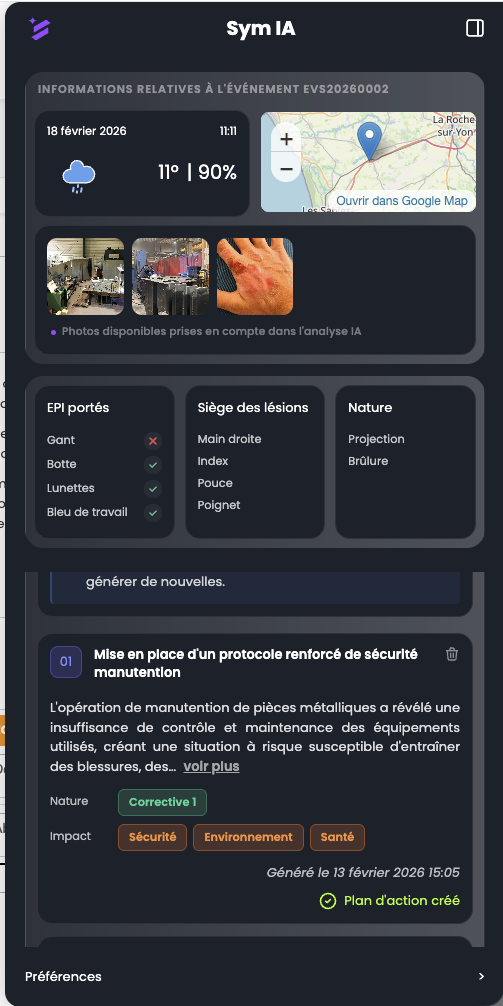
Centralize actions stemming from audits, non-conformities, and management reviews, assign an owner and a deadline for each, track completion rates in real time, and verify effectiveness once the action is closed : this is exactly what the Symalean QHSE action plan module. Instead of a list that grows indefinitely in a shared spreadsheet, every action remains linked to its source (audit, non-conformity, accident) and its proof of closure, ready to be used during inspections or certification audits.