Structuring your QHSE data : artificial intelligence is nothing and does not invent anything without data
We saw it in one of our previous articles QHSE artificial intelligence : myth or revolution in progress ?, artificial intelligence is based on a unique fuel: The data. But, an AI can't do anything actionable without a minimum of context, clarity, and consistency.
This is why structuring your QHSE data is a strategic prerequisite before any artificial intelligence invitation.
What do we mean by structuring your QHSE data ?
From data... to business knowledge
Structuring data is not just about organizing it in a table. That is, at the same time giving him a legible and consistent format, but above all a business context understandable.
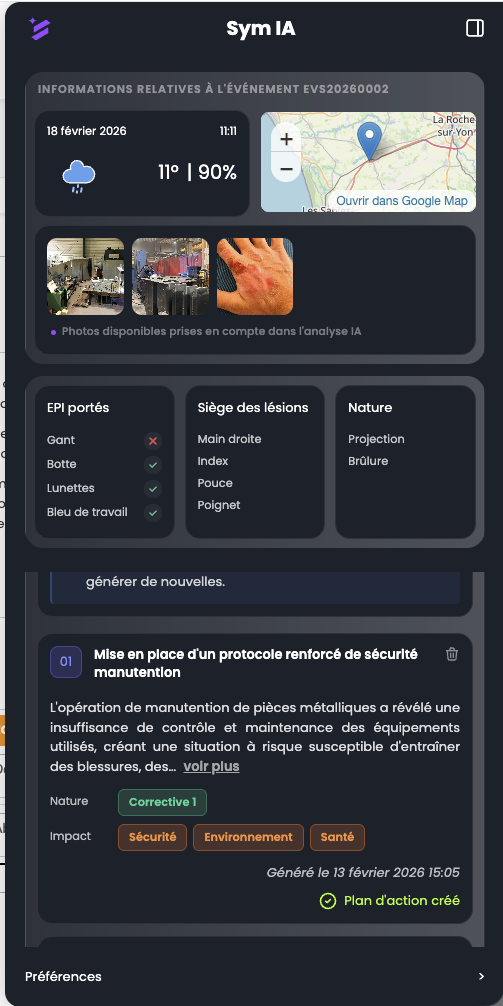
For example, an HSE event (accident, non-compliance, near accident, etc.) that is well declared, well categorized and enriched with comments or field photos will be 100 times more useful to an algorithm than poorly filled in free fields.
To structure = to activate
A well-structured data then becomes a know how to be reusable/exploitable ?
It can then be analyzed, compared, cross-referenced with other data or interpreted by an AI. It is this ability to extract operational or strategic value that makes a difference.
The risks of QHSE AI without reliable data
Not as good as grandma's : the GIGO
Data scientists use a rule that they formalize as follows: GIGO, for Garbage In, Garbage Out. This rule is simple. In fact, it considers that the quality of the results is determined by the quality of the input data.
If you provide inconsistent or incomplete data, then the AI will offer you erroneous or even dangerous results.
Without structuring, artificial intelligence cannot distinguish a critical event from a simple discrepancy. It does not include duplicates, inconsistencies, or gray areas in the analysis.
Loss of trust, loss of impact
Poorly-structured data leads to misinterpretations, ill-founded decisions... and as a result, to a loss of trust.
However, QHSE AI can only produce value if it is credible, reliable and interpretable.
Structuring your data : what concrete business benefits ?
Make better decisions, faster
A well-structured QHSE database makes it possible to :
- Detect weak signals more quickly,
- Prioritize preventive actions,
- Be impartial and objective in arbitrations.
In fact: gain in reactivity and agility, in a context where security issues and regulations are accelerating.
Consolidating a pool of business knowledge
By accumulating qualitative data, a company is created a valuable QHSE library. This data library makes it possible to feed the AI to generate :
- Predictive analytics,
- Targeted recommendations,
- Continuous optimization models.
A gradual and continuous approach
Structuring your data is done over time, gradually and in stages. Everything deployed in this direction sets the stage for AI that is truly useful and applied to the business context.
Artificial intelligence, but not without ethics: a useful reminder
Chez Symalean, we have chosen to develop an ethical, simple and transparent AI. And above all : An AI at the service of humans.
Structuring the data also ensures that the algorithm works fromhigh-quality, anonymized information, respectful of the company's context and the rights of users.
It is this rigor that guides our ethical charter and our Sym Ai artificial intelligence engine. You can go further by discovering the pillars of our Sym Ai accessible here, from our website.
From data... to business value
The promise of artificial intelligence in QHSE is real.
But it can only happen if the company Get the ground ready today : by structuring its data, by equipping its processes and by integrating AI into a continuous, progressive and ethical approach.
We've seen it throughout this article, without reliable data, there's no useful AI. But with structured data, the entire QHSE function can increase in power.