Introduction : a major turning point for quality
The standard ISO 9001 has been the global reference for more than 30 years in quality management. More than 1 million organizations, in 190 countries, rely on this framework to structure their processes, increase customer satisfaction, and improve their performance.
In 2023, our QHSE experts offered you an article explaining Why the ISO 9001 standard is crucial for the success of a business ; today, we offer you a new overview of this standard.
Why? Because it integrates the major current challenges:
— digital transformation and data management,
— cybersecurity and resilience,
— CSR and climate issues,
— better governance of processes.
This update also aims to make certification more accessible to businesses, especially SMEs, which often encounter difficulties in formalizing and engaging in this process in the face of the quantity of documents requested.
Fort of our 15 years of experience and the support of more than 300 active customers (industry, food, transport, logistics), we offer you a clear and concrete analysis of this evolution.
And if you have already read our article on the evolution of the standard ISO 14001:2026, you will see that the two standards are increasingly converging, reinforcing the importance of an integrated QHSE approach.
Historical background and justification for a new revision
Since its first publication in 1987, ISO 9001 has evolved regularly to adapt to business needs and economic realities:
- 1987 : first version, very focused on documentation and the foundations of quality management.
- 1994 : clarification of requirements and strengthened control.
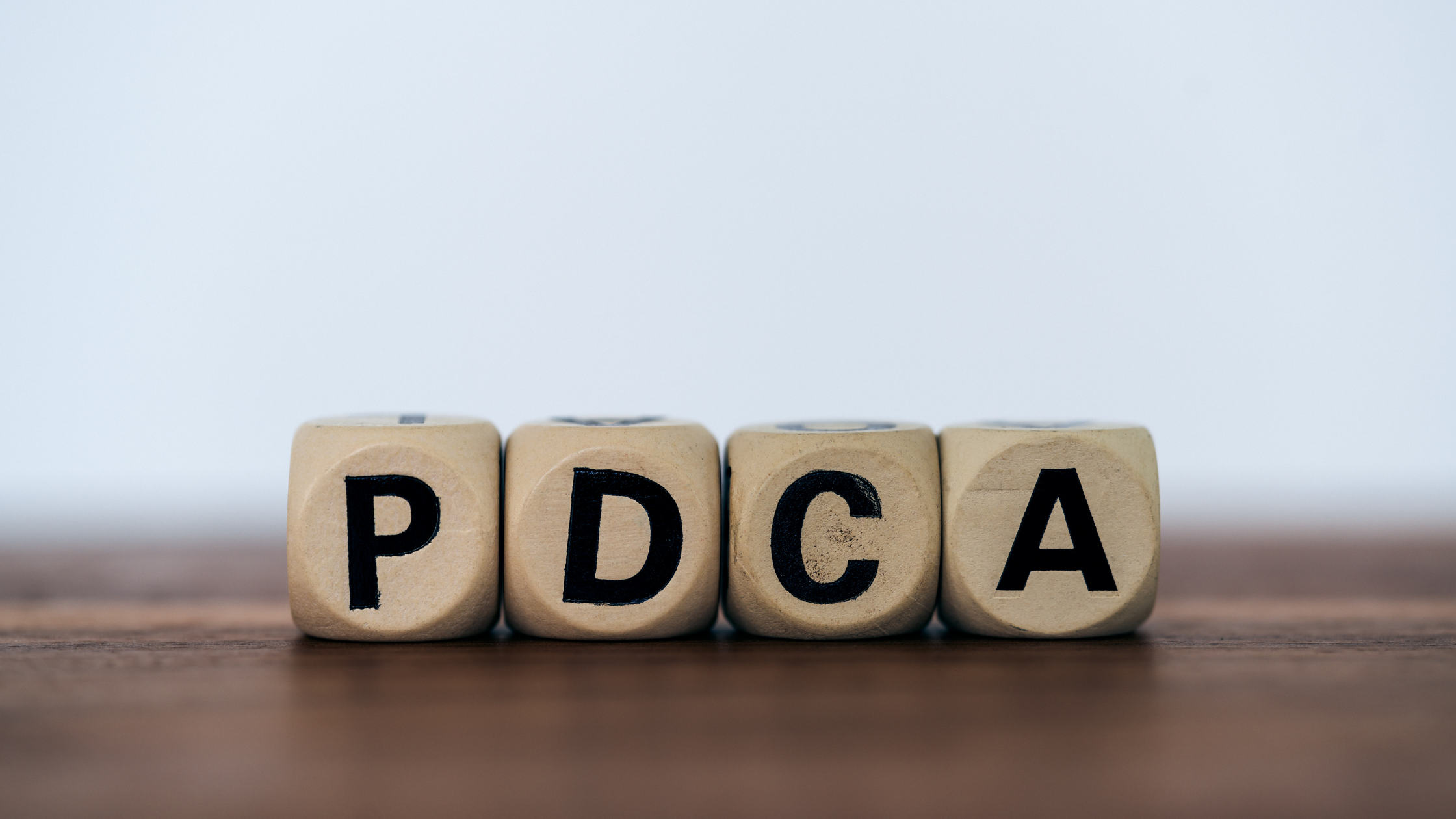
- 2000 : revolution with the process approach and the PDCA (Plan-Do-Check-Act).
- 2008 : consolidation version, few major changes and improvements in compatibility with ISO 14001.
- 2015 : profound redesign with the introduction of HLS structure, risk management and documentary simplification.
Ten years later, a new step is needed. Why ?
- Digital transformation : data explosion, cloud, AI, cybersecurity.
- Societal expectations : climate, ethics, corporate social responsibility.
- New risks : health crises, supply disruptions, cyberattacks.
- Need for simplification : still too many companies, especially SMEs, perceive the ISO 9001 standard as complex to implement.
In fact, the standard continues to place customer satisfaction and the conformity of products and services at the center of its requirements. It does not aim to become a global or integrated performance framework, but to maintain the founding spirit of ISO 9001: the PDCA logic, the process approach and risk management, which remain its essential pillars. Our experts have also written an article for you about PDCAs, if you want to go further: discover it here.
Like ISO 14001:2026, which strongly integrates the climate dimension, ISO 9001 will broaden its scope to include durable quality, in line with global challenges.
What's new with ISO 9001:2026
The future version of the standard will revolve around 5 major axes.
1. Simplifying and clarifying requirements
- Objective: to make the standard more readable, especially for SMEs.
- Heritage of the 2015 version: clarification of the risk/opportunity approach and streamlining of documentation.
- What is changing: more direct formulations, operational examples, fewer gray areas.
Concrete example : instead of “the organization must determine the risks and opportunities”, the standard will be able to detail the expected methods.
2. Climate and environment integration
- New unavoidable challenge: each organization will have to demonstrate that it takes into account climate change in its context analysis. “However, users of the standard will be asked to take an interest in climate and environmental change; it is a concern of the international community and a commitment of ISO to respond to it.”, specifies the president of the AFNOR Commission.
- Alignment with ISO 14001 and CSR expectations.
- As a result, quality is no longer limited to products/services, but includes their global impact.
In addition, a new amendment on ISO 9001 has been released and accentuates the fact that “the organization must determine if there are issues arising from climate change”. This is therefore fully in line with this new consideration.
Agri-food example : a producer will have to demonstrate the resilience of its value chain in the face of climate hazards.
3. Cybersecurity and data management
Xavier Petit (active member of the International Standardization Committee) explains the expectations on the part dealing with documented information. It indicates that”New cybersecurity challenges have an impact on quality, because a quality approach involves documenting information in order to provide evidence and leave traces. It is now appropriate to describe how to do it with complete integrity, availability and confidentiality.”.
- Explosion in data volumes (+30% by 2028 according to projections).
- New requirements on: traceability of flows, integrity, availability, confidentiality.
- Link with ISO 27001 (information security).
Industrial example : obligation to control supplier data and production indicators to avoid fragmentation and quality losses.
4. CSR, leadership and ethics
- Strengthening the role of management: beyond quality, it must embody ethics and integrity.
- Explicit introduction of the issues of CSR And of the value chain.
- As a result, customer satisfaction is becoming inseparable from social and environmental responsibility.
Transport/logistics example : obligation to integrate sustainability and carbon impact in supplier assessment.
5. Resilience and Business Continuity (PCA)
A Business Continuity Plan (BCP) is a documentary framework defining the strategies and protocols necessary to ensure the continuity of a company's essential functions during major disruptions (pandemics, armed conflicts, natural disasters, etc.). Since the COVID-19 pandemic, this problem has occupied a strategic position in organizational management.
The PCA is structured around three main components :
- THEcriticality assessment different crisis scenarios,
- La definition of intervention strategies and corrective measures,
- As well as the recovery time planning and back to normal.
Businesses are facing more and more external problems: health crises, economic changes, natural disasters, etc. These disruptions are forcing companies to change the way they work and sometimes, rethink their business model.
The standard aims to help businesses be more flexible, more agile, and better able to bounce back from the unexpected.
- Health crises, conflicts, disasters: organizations must demonstrate their ability to continue their critical activities.
- Possible integration of a business continuity plan (PCA) based on process analysis.
Logistic example : a specific plan for managing supply disruptions.
6. Process governance: from pilot to owner
- Currently: the role of the process driver is not very explicit.
- Novelty: concept of process owner responsible for guaranteeing performance and associated resources.
- Consequence: more accountability and traceability.
Industry example : the owner of the “production” process will have to report directly to management on its results.
What are the concrete impacts for businesses ?
ISO 9001:2026 is not only a technical development. It will transform the way businesses approach quality.
Expected practical changes
— Update of context analyses to include climate and cybersecurity.
— Strengthening process governance.
— Formalization of a PCA.
— More flexible documentation, but more demanding in terms of consistency.
Business opportunities
— Differentiation on calls for tenders and/or fund raising from investors.
— Strengthening customer trust through transparency and ethics.
— Optimization of costs through better control of risks and processes.
Risks of non-expectations
— Delays in certification audits.
— Loss of competitiveness in sectors sensitive to standards (agro, transport, industry).
— Degraded image among key account customers.
Sectoral focuses
— Industry : major challenges on data and cybersecurity.
— Agri-food : climate integration + supplier value chain.
— Transport/logistics : PCA and organizational agility.
How and when should we prepare now for the new version of ISO 9001 ?
The official publication of the standard is expected in 2026. But in order not to undergo the transition, it is better to anticipate today.
What are the key preparation steps ?
- Internal Audit : assess your current system vs. new expectations.
- Context analysis update : include climate, cybersecurity, CSR.
- Process mapping : identify drivers/owners, critical processes.
- Business Continuity Plan : building a simple but effective PCA.
- Digitalization : centralize data, indicators and audits in a single tool.
The role of SaaS software like Dyo by Symalean
Our field experience shows us that success is based on centralization and automation.
Dyo allows you to:
- Manage your processes and responsibilities,
- Integrate your risk/opportunity analyses,
- Follow up your audits and action plans,
- Prepare your certifications in real time.
With Dyo, the transition to ISO 9001 v2026 becomes a efficiency lever, not a constraint.
Conclusion and perspective
The standard ISO 9001:2026 does not just update a quality framework. It reflects the major challenges of our time: climate, digitalization, ethics, resilience.
Rather than seeing this review as an additional obligation, it should be considered as a opportunity to modernize your practices, to strengthen the trust of your customers and to create lasting value.
At Symalean, we already support more than 300 organizations in this transformation thanks to our expertise and our Dyo SaaS solution.
👉 Download our ISO 9001 practical guide to calmly prepare for this evolution.
👉 Or find out now How Dyo simplifies your ISO 9001:2026 transition with a personalized demo.
Important Warning — Interim Information
The items in this article are based on current trends and our research, but are not definitive information. Many points remain subject to change as standardization work progresses.
The evolutions and adjustments described do not reflect a finalized version of the standard. They may be subject to revision, enrichment or deletion before the final publication of the official document.
The objective of this article is to present the current guidelines in order to facilitate your preparation, while keeping in mind that it cannot constitute an absolute reference concerning the final content of the future ISO 9001 v2026 standard.